
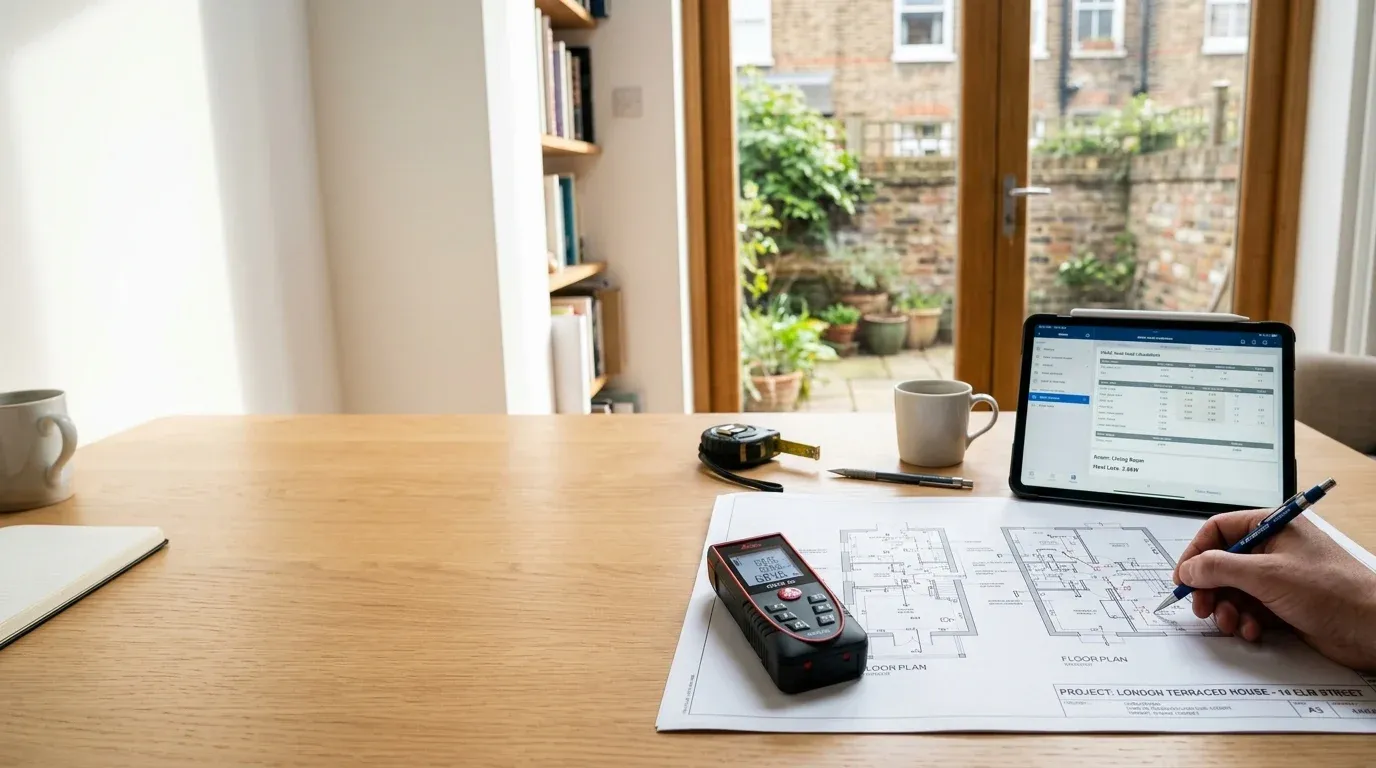
A purpose-built garden office or outdoor studio offers an ideal dedicated workspace, but maintaining a stable, comfortable temperature year-round presents a unique structural and thermal challenge. Due to lightweight timber framing, large glazing ratios (such as bifold or sliding aluminium doors), and high exposure to outdoor elements, garden rooms suffer from severe temperature swings—freezing cold in winter and intensely hot during summer months.
The most energy-efficient, reliable, and cost-effective solution for heating and cooling an outdoor workspace is an inverter-driven reverse-cycle air-to-air heat pump (commonly referred to as residential air conditioning).
This comprehensive technical guide explains how reverse-cycle systems work in timber outbuildings, compares running costs against traditional electric heaters, details acoustic performance for remote video calls, and covers electrical requirements and UK tax incentives.
1. The Thermal Challenge of Timber Garden Buildings
Even the highest specification contemporary garden rooms constructed with Structurally Insulated Panels (SIPs), 100 mm PIR rigid board insulation, and double-glazed solar-control glass behave very differently from conventional masonry homes:
- Low Thermal Mass: Unlike cavity brick or block walls, timber has low thermal mass. It cannot store heat during warm periods and release it slowly when ambient temperatures drop. When you turn off a heat source in a wooden outbuilding on a sub-zero winter evening, internal temperatures plummet within hours.
- Intense Summer Solar Heat Gain: Modern garden studios frequently feature large south-facing or west-facing aluminium bifold doors or floor-to-ceiling glass panels. Without active mechanical cooling, incident solar radiation turns the interior into an unventilated greenhouse, with temperatures frequently surpassing 35°C to 40°C by midday.
- Intermittent Usage Patterns: Homeowners do not occupy garden offices continuously. You need a climate control system that can raise the temperature from 6°C to a comfortable 21°C within 15 minutes of arriving in the morning, rather than waiting hours for an underfloor heating mat or oil radiator to warm the room.
2. Running Costs: Heat Pump vs Electric Panel Heaters
Most garden room builders supply basic electric convector heaters or oil-filled radiators as standard. While cheap to purchase initially, direct electric resistance heaters are the most expensive way to heat an outdoor building.
The Physics of Heat Generation
- Direct Electric Heaters (COP 1.0): Every kilowatt-hour (kWh) of electricity consumed by a panel heater or oil radiator produces exactly 1.0 kWh of thermal heat. There is no efficiency multiplier. Running a standard 2 kW electric heater for 8 hours a day at an average UK electricity tariff of 30p/kWh costs approximately £4.80 per day or £105.60 per month in heating alone.
- Air-to-Air Heat Pumps (SCOP 4.0+): A modern reverse-cycle split air conditioner does not create heat through electrical resistance; it absorbs ambient heat from the outside air (even at outdoor temperatures as low as -15°C), compresses the refrigerant to elevate its temperature, and releases that concentrated heat indoors. A modern high-efficiency unit achieves a Seasonal Coefficient of Performance (SCOP) between 4.0 and 4.6.
This means that for every 1 kWh of electricity consumed, the system generates 4.0 to 4.6 kWh of usable heat.
At an electricity rate of 30p/kWh, providing 2 kW of thermal warmth using an air-to-air heat pump costs approximately 13p to 15p per hour—delivering 70% to 75% savings on electricity bills compared to electric panel heaters. For a detailed breakdown of hourly tariffs, seasonal heating math, and off-peak charging strategies, explore our guide on UK air conditioning running costs.
3. Acoustic Engineering for Zoom, Teams & Voice Calls
For home office professionals, acoustic disturbance is a critical concern. If your heating or cooling system hums, rattles, or blows loudly, it degrades concentration and interferes with microphone input during remote client meetings.
Split Systems vs Portable Units
- Portable Air Conditioners (56–65 dB(A)): Free-standing portable air conditioners house the compressor, condenser fan, and evaporator fan within a single plastic chassis inside the room. They generate noise levels comparable to a vacuum cleaner running continuously. Furthermore, the exhaust hose pushes air outside through a cracked window, drawing hot humid air back inside and causing high energy waste.
- High-Wall Split Systems (19–21 dB(A)): In a professionally engineered split installation, the noisy mechanical compressor sits outside in the garden on anti-vibration mountings. The indoor fan coil unit operates with whisper-quiet aerofoil fan blades and inverter motor stepping.
At low speed and in dedicated sleep or quiet modes, leading indoor units (such as Daikin Emura/Perfera or Mitsubishi Electric MSZ-EF) emit between 19 dB(A) and 21 dB(A). For context, 20 dB(A) is equivalent to rustling leaves in a calm forest, and human whispering measures approximately 30 dB(A). Sensitive directional studio microphones and noise-cancelling software (such as Krisp or Teams AI noise suppression) cannot detect a high-wall unit operating on low speed.
4. System Sizing for Garden Offices
Selecting the correct heating and cooling capacity ensures rapid temperature pull-down without short-cycling (which increases wear on compressor components and prevents proper dehumidification).
| Room Dimensions | Internal Floor Area | Recommended Capacity | Typical Compressor Model |
|---|---|---|---|
| 3m × 2.5m | Up to 10 m² | 2.0 kW (approx. 7,000 BTU) | Ultra-compact single-split |
| 4m × 3m | 10 m² to 16 m² | 2.5 kW (approx. 9,000 BTU) | Standard domestic 2.5 kW inverter |
| 5m × 4m | 16 m² to 24 m² | 3.5 kW (approx. 12,000 BTU) | High-output 3.5 kW inverter |
| 6m × 4m+ | 25 m² and above | 4.2 kW – 5.0 kW | Multi-split or twin high-output |
Note: Sizing adjustments are required if your garden room features unshaded west-facing glazing, polycarbonate roofing, or thin insulation layers.
5. Electrical Requirements & SWA Armoured Cabling
To install an air conditioning heat pump safely, the garden studio’s electrical supply must meet strict UK national standards:
- Dedicated Sub-Main Supply: The garden building should be fed by a dedicated Steel Wire Armoured (SWA) sub-main cable running from the main house consumer unit, terminating at an internal mini consumer unit with suitable Miniature Circuit Breakers (MCBs) and 30mA Residual Current Device (RCD) protection.
- Current Draw: A typical 2.5 kW inverter heat pump draws only 3.0 to 4.5 Amps under steady-state operation, with peak compressor start-up current limited by modern soft-start inverters. In almost all modern garden offices with a 16A or 32A sub-main supply, the existing supply is more than sufficient.
- External Rotary Isolator: Under UK electrical regulations (BS 7671 Part P), a weatherproof, lockable rotary isolator switch must be mounted externally adjacent to the outdoor condenser unit to allow safe isolation during routine servicing.
6. Planning Permission & Permitted Development
Many garden office installations may be permitted development under GPDO Class G, but it is not automatic. The property, the outdoor unit position, noise and any conservation or listed-building restrictions all matter. Where required, the installation must also meet the MCS 020 noise standard.
If the garden office sits close to a boundary, we look at siting the condenser on the far side or rear face, acoustic screening, or a quieter unit. We check the current rules at your survey and confirm the position in writing.
Read our planning permission guide for the principles and official links. Rules can change; the official guidance is the source of truth.
Conclusion & Next Steps
Upgrading your garden office with an inverter air conditioning heat pump transforms a seasonal timber shed into a comfortable, productive, year-round executive sanctuary. You eliminate stifling summer humidity, reduce winter heating expenditure by up to 75%, and protect your sensitive computers and electronics from cold damp air.
To view our all-inclusive installation packages, equipment specifications, and warranty guarantees, review our transparent air conditioning prices or contact our certified technicians for a free survey and bespoke quote for your professional air conditioning installation.